
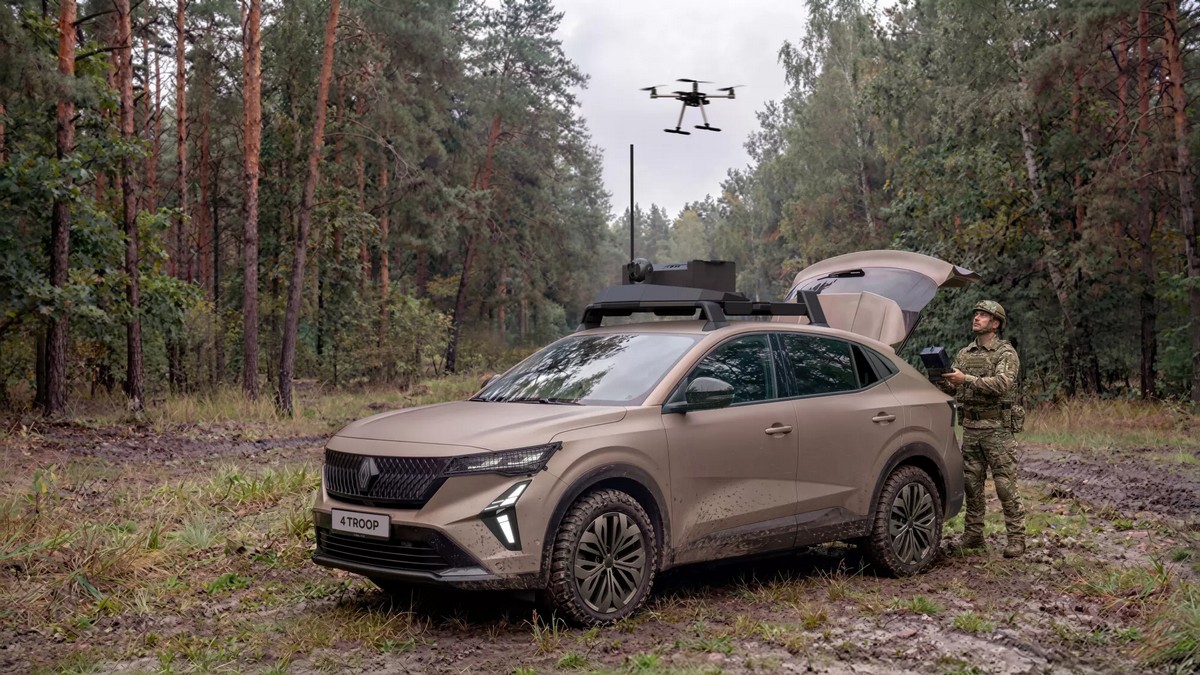
Renault Develops First Military Vehicle Based on Civilian Chassis Platform
French automotive giant Renault has announced a groundbreaking development in military vehicle technology, creating the first combat-ready vehicle built upon a civilian automotive platform. This innovative approach represents a significant shift in how military vehicles may be designed and manufactured in the future, potentially revolutionizing defense logistics and procurement processes across NATO and allied nations. The new vehicle will incorporate advanced field communication technologies developed by Thales, one of Europe’s leading defense electronics contractors, creating a seamless integration between commercial automotive engineering and military-grade systems.
The partnership between Renault and Thales marks a strategic convergence of civilian automotive expertise and defense technology capabilities. Under this collaboration, Renault’s existing civilian platforms will undergo extensive modifications to meet rigorous military specifications while retaining the cost advantages and proven reliability of mass-produced vehicle architectures. Thales will contribute its sophisticated field communication systems, which have been deployed in numerous military operations worldwide, ensuring that the vehicles maintain secure, reliable connectivity in challenging combat environments. This integrated approach addresses one of the most persistent challenges in military vehicle procurement: balancing capability with affordability.
The concept of adapting civilian vehicles for military use is not entirely new, but Renault’s approach represents a more systematic and comprehensive methodology than previous efforts. Historically, military forces have occasionally requisitioned civilian vehicles during wartime or modified commercial trucks for logistics purposes. However, these adaptations were typically makeshift solutions rather than engineered military systems. The new Renault platform aims to bridge this gap by designing modifications that transform civilian vehicles into purpose-built military assets while maintaining parts commonality with commercial production lines. This could dramatically reduce maintenance costs and simplify supply chains for armed forces operating these vehicles.
The defense industry has been grappling with escalating costs of purpose-built military vehicles for decades. Modern military vehicles like the American Joint Light Tactical Vehicle or the British Foxhound can cost hundreds of thousands of dollars per unit, with specialized components that require dedicated manufacturing facilities and trained maintenance personnel. By leveraging civilian automotive platforms, which benefit from economies of scale in global production, military procurement costs could potentially be reduced significantly. Additionally, civilian vehicles often incorporate the latest advances in fuel efficiency, electronics integration, and safety systems that military-specific designs may take years to adopt.
Thales’s contribution to this project extends beyond simple communication equipment installation. The company’s integrated field communication systems represent decades of development in secure military networking, satellite communications, and electronic warfare resistance. These systems enable vehicles to serve as mobile command posts, coordinate with aerial assets, and maintain situational awareness across dispersed units. The integration of such sophisticated electronics into a civilian-derived platform requires careful engineering to ensure electromagnetic compatibility, protection against cyber threats, and resilience to the harsh conditions of military operations. Thales has previously worked with various European armed forces on similar integration projects, bringing substantial experience to this partnership.
The timing of this announcement coincides with increased European focus on defense self-sufficiency following geopolitical developments in recent years. European NATO members have committed to increasing defense spending, creating opportunities for domestic defense manufacturers to expand their offerings. France, in particular, has emphasized the importance of maintaining a robust domestic defense industrial base, and projects like the Renault military vehicle platform align with national strategic objectives. The vehicle could potentially serve multiple roles including reconnaissance, personnel transport, and logistics support, offering flexibility that appeals to budget-conscious military planners seeking versatile platforms.
Industry analysts suggest that if successful, this approach could establish a new paradigm in military vehicle procurement. Other major automotive manufacturers may follow Renault’s lead, creating competition that could further drive down costs and accelerate innovation. The key challenge will be demonstrating that civilian-derived platforms can meet the demanding protection, mobility, and reliability requirements of modern military operations. Field testing and potential combat deployment will ultimately determine whether this innovative approach fulfills its promise of delivering capable military vehicles at civilian-competitive prices.