
Thousands Protest Against Trump Son-in-Law’s Resort Project on Albanian Coastline
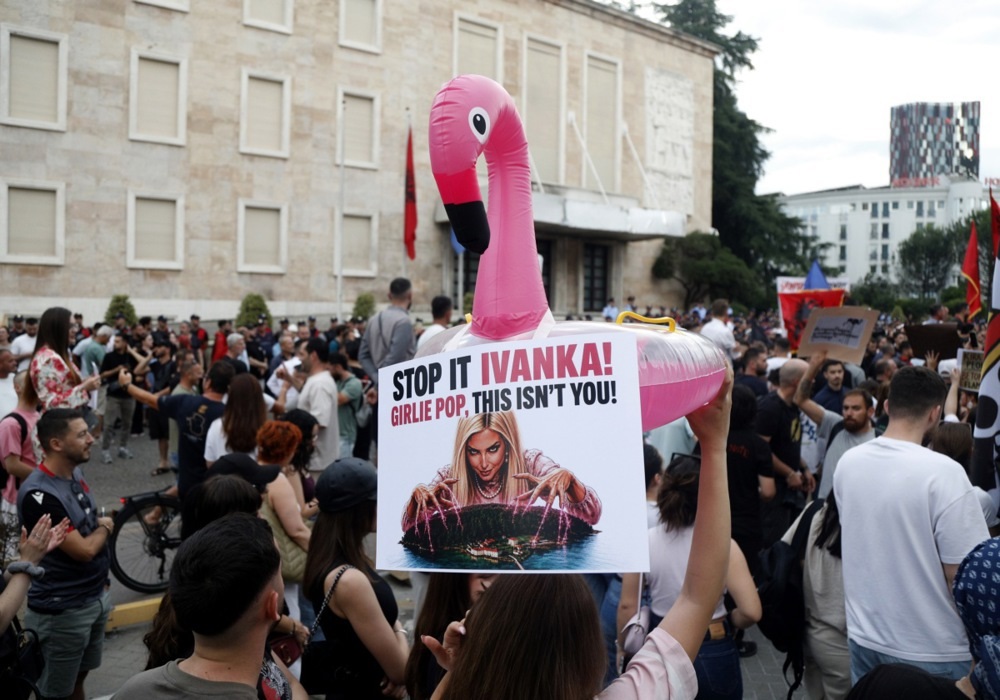
Massive demonstrations have erupted across Albania as thousands of citizens took to the streets to oppose a controversial luxury resort development planned by Affinity Partners, the investment firm led by Jared Kushner, former senior advisor to President Donald Trump and husband to Ivanka Trump. The protests, which drew participants from across the country, center on concerns about environmental destruction and the commercialization of Albania’s pristine Adriatic coastline, one of the last unspoiled stretches of Mediterranean shoreline in Europe.
The proposed development site sits within a protected coastal zone that environmental groups have long fought to preserve. Albania’s Adriatic and Ionian coastlines have increasingly attracted international attention for their crystal-clear waters, untouched beaches, and unique biodiversity. Conservationists argue that large-scale tourism development would irreparably damage fragile ecosystems that have survived precisely because of their isolation from mass tourism that has transformed other Mediterranean destinations.
Protesters gathered in Tirana, the capital, as well as in coastal cities, carrying banners demanding the protection of their natural heritage. Many demonstrators expressed frustration with what they perceive as their government’s willingness to sacrifice environmental assets for foreign investment. The opposition has framed the project as emblematic of broader concerns about transparency in government dealings and the influence of wealthy international investors on Albanian policy decisions. Social media footage showed crowds stretching through city centers, with participants of all ages joining the demonstrations.
Affinity Partners, founded by Kushner after he left the White House in 2021, has attracted significant attention and controversy for its investment activities. The firm reportedly raised billions of dollars from sovereign wealth funds in Saudi Arabia and other Gulf states shortly after Kushner’s departure from government service, raising questions from ethics watchdogs about potential conflicts of interest. The Albania project represents one of several international ventures the firm has pursued in emerging markets, though it has become the most publicly contentious.
Albania’s relationship with foreign investment has been complex since the country emerged from decades of isolation under communist rule. After the collapse of the authoritarian regime in 1991, the nation embarked on a difficult transition to market economics, experiencing periods of instability including the catastrophic pyramid scheme collapse of 1997. In recent years, the government has actively courted international tourism investment as part of its economic development strategy, positioning the country as an affordable alternative to overcrowded destinations like Croatia and Greece. However, this latest controversy highlights growing tensions between development aspirations and environmental preservation.
Environmental organizations have documented the ecological significance of the proposed development area, noting it serves as habitat for several protected species and maintains water quality essential for marine life along the coast. The Albanian coastline features a combination of sandy beaches, rocky coves, and wetland areas that support diverse ecosystems. Critics of the resort project point to examples from other Mediterranean countries where rapid tourism development led to coastal erosion, water pollution, and the destruction of natural landscapes that originally attracted visitors. They argue Albania has an opportunity to learn from these mistakes rather than repeat them.
The Albanian government has defended its approach to foreign investment while acknowledging the need to balance economic growth with environmental protection. Officials have stated that any development would be subject to environmental review processes, though protesters remain skeptical about the rigor of such assessments given the high-profile nature of the investors involved. The controversy has also drawn attention from European Union officials, as Albania is a candidate country for EU membership and must demonstrate commitment to environmental standards as part of the accession process.
As the protests continue, the situation underscores broader global debates about sustainable tourism, the rights of local communities to determine the future of their natural resources, and the complex intersections of international finance and environmental policy. For many Albanians, the demonstrations represent not just opposition to a single project, but a statement about the kind of development they want for their country’s future. Whether the sustained public pressure will influence the project’s fate remains to be seen, but the images of thousands marching to protect their coastline have already captured international attention and added a new chapter to ongoing discussions about responsible development in sensitive ecological areas.