
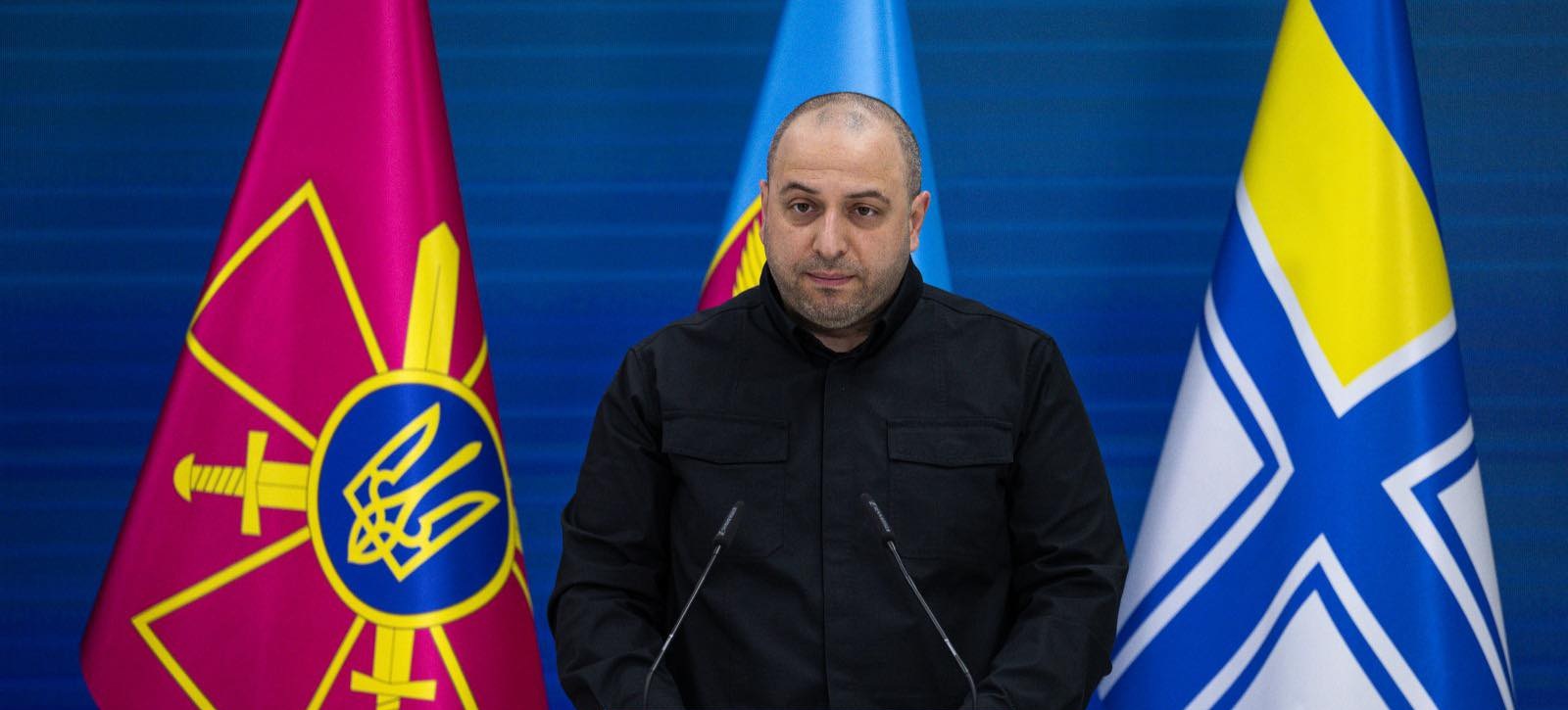
Умеров назвал европейские компании, которые уже присоединились к Антибаллистической коалиции
{"title":"Umerov Names European Defense Companies Joining Anti-Ballistic Coalition Initiative","content":"<p>Ukraine's Secretary of the National Security and Defense Council (NSDC), Oleksandr Umerov, has announced the names of twelve major European defense companies that have committed to participating in the creation of a comprehensive anti-ballistic missile defense system for Europe. This landmark initiative represents one of the most ambitious collaborative defense projects in recent European history, bringing together some of the continent's most sophisticated military technology manufacturers under a unified strategic umbrella.</p><p>The announcement comes at a critical juncture in European security policy, as nations across the continent reassess their defensive capabilities in light of ongoing geopolitical tensions. The formation of this coalition signals a significant shift in how European nations approach collective defense, moving beyond traditional NATO frameworks to develop indigenous capabilities that can address emerging missile threats from multiple potential adversaries.</p><p>Among the companies joining the coalition are several of Europe's most prominent defense contractors, each bringing specialized expertise to the ambitious project. These firms represent a cross-section of the continent's defense industrial base, spanning countries including France, Germany, Italy, the United Kingdom, and several other NATO member states. The participating companies possess extensive experience in developing radar systems, interceptor missiles, command and control infrastructure, and the sophisticated software required to integrate these disparate elements into a cohesive defensive shield.</p><p>The concept of a European anti-ballistic missile system has been discussed for decades, but previous efforts have often stalled due to funding disputes, technological challenges, and disagreements over strategic priorities. The current initiative appears to have overcome many of these obstacles, driven in large part by the changed security environment following Russia's full-scale invasion of Ukraine in February 2022. European leaders have watched with concern as missile and drone attacks have devastated Ukrainian cities, providing a stark demonstration of the vulnerabilities that exist in current air defense architectures.</p><p>Historical context reveals that Europe's approach to ballistic missile defense has evolved significantly since the end of the Cold War. During the 1990s, many European nations reduced their investments in air defense systems, believing that the threat of large-scale missile attacks had diminished with the collapse of the Soviet Union. This assumption proved overly optimistic, and the past decade has seen a gradual reversal of this trend. The new coalition represents an acceleration of these efforts, with participating companies expected to pool research and development resources, share technological advances, and work toward interoperable systems that can protect the entire continent.</p><p>Defense analysts have noted that the coalition's formation addresses a critical gap in European security architecture. While individual nations possess various air defense capabilities, these systems often cannot communicate effectively with one another, creating potential blind spots that adversaries could exploit. The new initiative aims to create a seamless defensive network stretching from the Arctic to the Mediterranean, capable of tracking and intercepting ballistic missiles, cruise missiles, and increasingly sophisticated drone swarms that have become a hallmark of modern warfare.</p><p>The financial commitment required for such an ambitious project is substantial, with preliminary estimates suggesting investments could reach tens of billions of euros over the coming decade. However, proponents argue that this expenditure is justified given the existential nature of the threats being addressed. Ukraine's experience has demonstrated that adequate missile defense can mean the difference between functioning cities and devastated infrastructure, between preserved civilian lives and mass casualties.</p><p>Looking ahead, the coalition faces significant technical and political challenges. Integrating systems from twelve different companies across multiple nations will require unprecedented levels of cooperation and standardization. Questions remain about command authority, data sharing protocols, and how the system will interface with existing NATO infrastructure. Nevertheless, the participation of so many major defense contractors suggests that both industry and government leaders believe these obstacles can be overcome, potentially creating a model for future European defense cooperation that extends beyond missile defense to other critical security domains.</p>}