
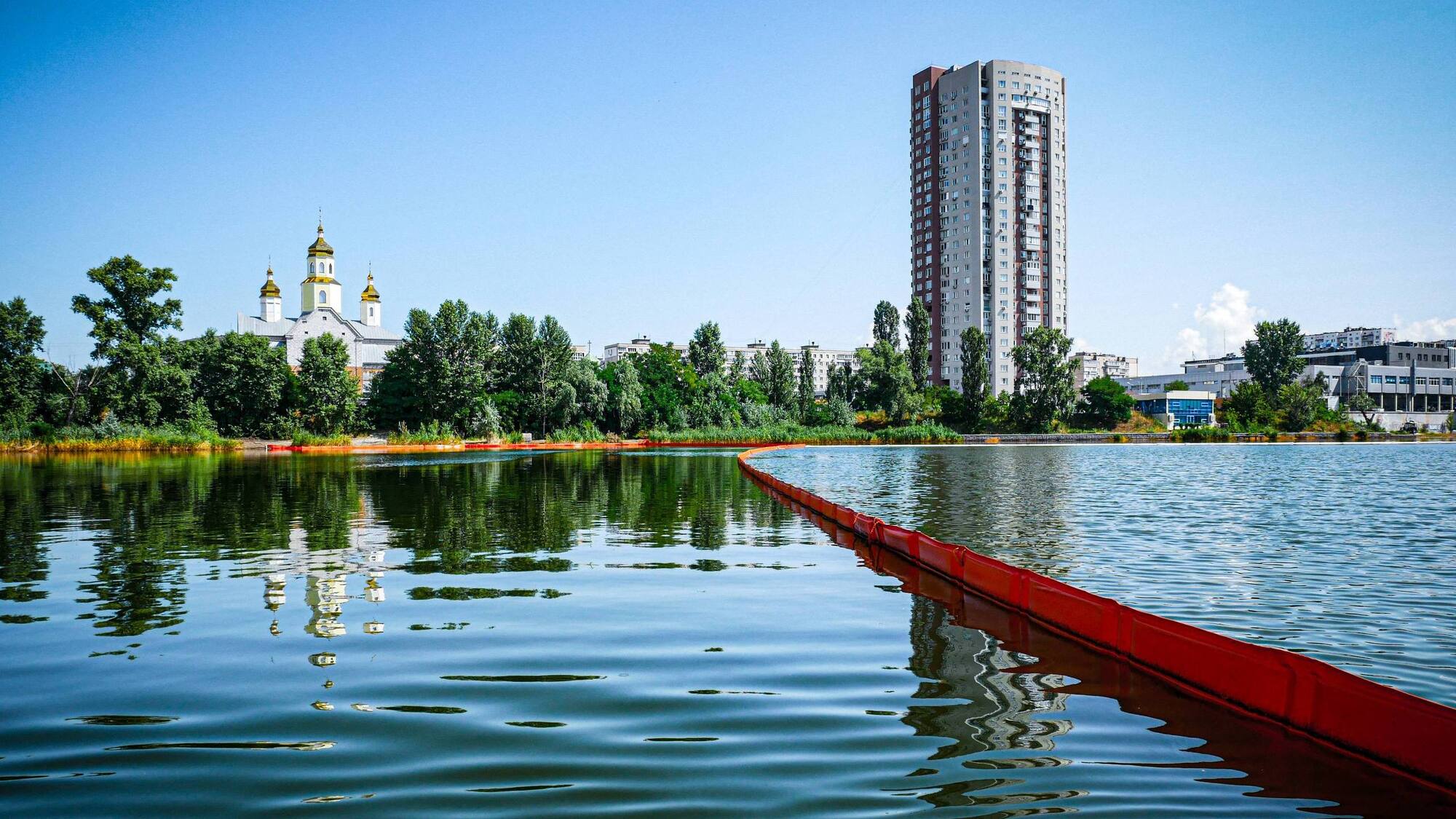
Kyiv Continues Second Week of Cleanup Operations at Kyryllivske Lake Following Petroleum Contamination
Environmental cleanup crews in Ukraine’s capital have entered their second week of intensive remediation efforts at Kyryllivske Lake, one of Kyiv’s most significant urban water bodies. The municipal enterprise “Pleso” has deployed specialized equipment to address petroleum contamination that has threatened the ecological balance of this historic lake, which serves as an important recreational and environmental resource for the city’s residents.
The cleanup operation has reached a critical phase with the introduction of a Mobitrac amphibious machine, a sophisticated piece of equipment specifically designed for wetland restoration and aquatic vegetation management. Workers are systematically removing contaminated reeds and other aquatic plants that have absorbed petroleum products, preventing further spread of pollutants throughout the lake’s ecosystem. The amphibious vehicle’s unique capabilities allow it to operate in shallow waters and marshy areas where conventional machinery cannot access, making it ideal for the delicate work required in this sensitive environment.
Kyryllivske Lake, located in the Podil district of Kyiv, has long been considered one of the city’s ecological treasures. The lake is part of a larger system of water bodies connected to the Dnipro River basin and has historically served as a habitat for numerous bird species, fish populations, and aquatic plants. Urban development over the decades has placed increasing pressure on the lake’s ecosystem, making incidents like the current contamination particularly concerning for environmental authorities and local residents who depend on the area for recreation and green space.
Petroleum contamination in freshwater bodies poses severe risks to aquatic ecosystems. When oil products enter lakes and ponds, they create a surface film that reduces oxygen exchange between water and atmosphere, potentially suffocating fish and other aquatic organisms. Additionally, toxic compounds in petroleum can bioaccumulate in the food chain, affecting everything from microscopic organisms to birds and mammals that depend on the lake for sustenance. The absorption of these pollutants by reed beds and other vegetation means that simply skimming surface contamination is insufficient — the affected plant material must be physically removed to prevent ongoing leaching of toxins.
The decision to use the Mobitrac amphibious system reflects modern best practices in environmental remediation. These versatile machines, originally developed in the Netherlands, have become essential tools for wetland management across Europe. They can harvest aquatic vegetation, remove debris, and perform dredging operations while minimizing disturbance to underlying sediments. In contamination scenarios, this precision is crucial — aggressive cleanup methods can sometimes cause secondary damage by stirring up polluted sediments and spreading contamination to previously unaffected areas.
Municipal authorities have not yet disclosed the source of the petroleum contamination, though investigations are reportedly ongoing. Such incidents can result from various causes, including illegal dumping, underground storage tank leaks, stormwater runoff carrying automotive fluids, or accidents at nearby industrial facilities. Kyiv, like many major cities, faces ongoing challenges in protecting its urban water bodies from pollution sources that have multiplied with increased vehicle traffic and industrial activity. The city maintains several lakes and reservoirs that require constant monitoring and periodic intervention to maintain water quality standards.
Environmental experts emphasize that the lengthy duration of cleanup operations underscores the complexity of remediating petroleum contamination in natural settings. Unlike spills on hard surfaces that can be quickly contained and cleaned, contamination in wetland environments requires careful, sustained effort to prevent long-term ecological damage. The current operation at Kyryllivske Lake will likely continue for several more weeks as crews systematically work through affected areas, with follow-up monitoring expected to continue for months to ensure the ecosystem’s recovery. Local environmental groups have called for increased investment in pollution prevention infrastructure and stricter enforcement of regulations to prevent similar incidents in the future.