
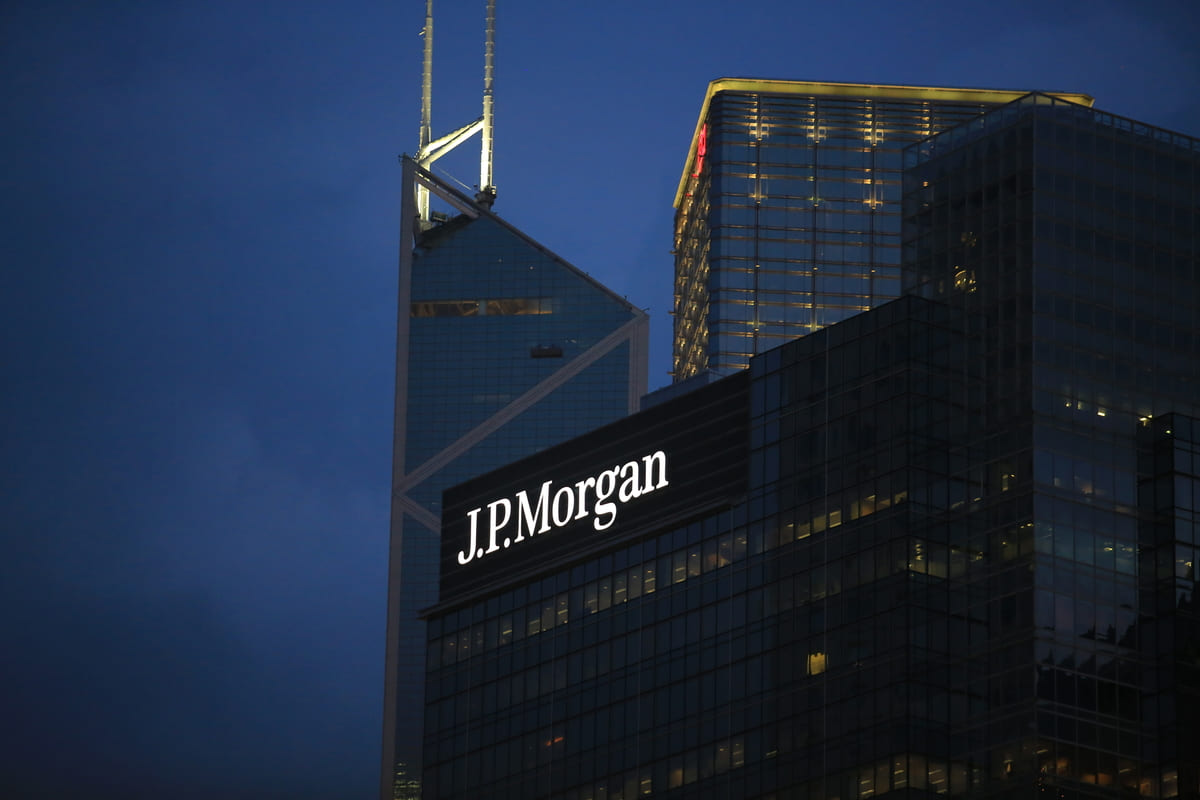
JPMorgan Chase on Track to Become World’s First Trillion-Dollar Bank
JPMorgan Chase, America’s largest financial institution, is rapidly approaching a historic milestone that would cement its position as the undisputed titan of global banking. According to Reuters, the banking giant is on course to become the first bank in history to achieve a market capitalization of one trillion dollars, a landmark that would place it among an elite group of companies that have reached this extraordinary valuation threshold.
The scale of JPMorgan’s dominance has become staggering by any measure. The bank’s current market value now exceeds the combined capitalization of its three closest competitors in the American banking sector, including Bank of America, Wells Fargo, and Citigroup. This remarkable gap illustrates just how far JPMorgan has pulled ahead of its rivals in the post-pandemic financial landscape, creating a separation that would have seemed unimaginable just a decade ago.
Under the leadership of CEO Jamie Dimon, who has helmed the institution since 2005, JPMorgan has consistently outperformed its peers through strategic acquisitions, technological investments, and disciplined risk management. Dimon’s tenure has seen the bank navigate through the 2008 financial crisis, during which JPMorgan acquired struggling rivals Bear Stearns and Washington Mutual, emerging stronger while competitors required government bailouts. The bank’s ability to capitalize on moments of industry distress has become a hallmark of its corporate strategy, most recently demonstrated by its acquisition of First Republic Bank in May 2023 following that institution’s collapse.
The journey toward a trillion-dollar valuation reflects broader trends in the concentration of financial power among the largest global institutions. JPMorgan reported record annual profits of approximately $50 billion in 2023, driven by rising interest rates that boosted its lending margins and a diversified business model that generates revenue across consumer banking, investment banking, asset management, and trading operations. The bank serves nearly half of American households and maintains relationships with the vast majority of Fortune 500 companies, giving it unparalleled reach into the American economy.
Analysts point to several factors behind JPMorgan’s exceptional performance and market premium. The bank has invested heavily in technology, spending over $15 billion annually on digital infrastructure and innovation, which has allowed it to capture market share from smaller regional banks struggling to compete in an increasingly digital financial services landscape. Its fortress balance sheet, with substantial capital reserves exceeding regulatory requirements, provides investors with confidence during periods of economic uncertainty, making JPMorgan shares a preferred holding for institutional investors seeking banking exposure.
The potential achievement of a trillion-dollar market cap would place JPMorgan in exclusive company alongside technology giants like Apple, Microsoft, Nvidia, Amazon, and Alphabet. Notably, no traditional financial institution has ever joined this club, highlighting the historic nature of this potential milestone. The comparison underscores how JPMorgan has managed to achieve tech-like valuations despite operating in a heavily regulated industry with traditionally lower growth rates than the technology sector.
However, the bank’s growing dominance has also attracted scrutiny from regulators and lawmakers concerned about systemic risk and market concentration. Some critics argue that institutions of JPMorgan’s size pose inherent risks to financial stability, as their potential failure could trigger cascading effects throughout the global economy. Despite these concerns, recent regulatory actions and proposed rules have not significantly impeded the bank’s growth trajectory. As JPMorgan approaches this unprecedented valuation milestone, its success serves as both a testament to effective corporate leadership and a symbol of the increasing consolidation that has reshaped the American banking industry in the 21st century.