
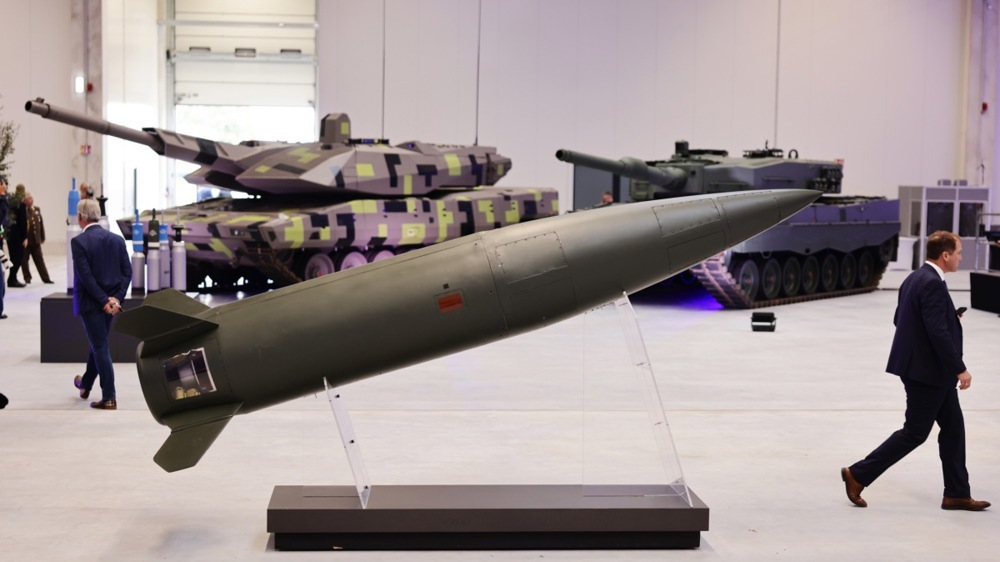
Lockheed Martin and Rheinmetall to Jointly Manufacture ATACMS Missiles in Germany
In a landmark defense partnership that signals a significant shift in transatlantic military cooperation, American aerospace giant Lockheed Martin and German defense conglomerate Rheinmetall have announced plans to establish joint production of the Army Tactical Missile System (ATACMS) in Germany. The agreement marks the first time these sophisticated long-range missiles will be manufactured outside of the United States, representing a historic milestone in NATO’s evolving defense industrial strategy.
The collaboration comes at a critical juncture in European security, as the continent faces its most serious military challenges since the Cold War. Russia’s ongoing invasion of Ukraine has fundamentally reshaped the security landscape, prompting NATO allies to dramatically increase defense spending and accelerate weapons production capabilities. The decision to produce ATACMS on European soil reflects a growing recognition among Western allies that distributed manufacturing is essential for maintaining military readiness and supply chain resilience.
ATACMS represents one of the most potent ground-launched tactical weapons in the NATO arsenal. The missile system, which has been in service with the United States Army since the early 1990s, can strike targets at ranges exceeding 300 kilometers with remarkable precision. Originally developed during the Cold War era, ATACMS has proven its battlefield effectiveness in multiple conflicts, including the Gulf War, Iraq War, and most recently in Ukraine, where the weapons have been credited with destroying Russian military assets deep behind the front lines. The missile’s ability to deliver a 500-pound warhead with GPS-guided accuracy makes it an invaluable tool for striking command centers, ammunition depots, and air defense systems.
Rheinmetall’s manufacturing facilities will become the first international production site for ATACMS, breaking with decades of exclusively American manufacturing. The German defense company has emerged as Europe’s most dynamic arms producer, rapidly expanding its portfolio and production capacity in response to surging demand from NATO members. Rheinmetall has already established itself as a leader in ammunition production, armored vehicles, and air defense systems, making it a logical partner for this ambitious undertaking. The company’s existing infrastructure, skilled workforce, and established quality control systems position it well to meet the stringent requirements of missile manufacturing.
The strategic implications of this partnership extend far beyond industrial considerations. By establishing ATACMS production in Europe, NATO effectively reduces its dependence on a single production source while simultaneously strengthening the alliance’s collective defense industrial base. Military analysts have long warned about the vulnerability of concentrated manufacturing, particularly in an era of potential great power conflict. The Ukraine war has starkly illustrated the importance of production capacity, as Western nations have struggled to replenish depleted stockpiles while maintaining support for Kyiv. Distributed manufacturing across multiple allied nations provides redundancy and surge capacity that could prove decisive in any future conflict.
The announcement also reflects the deepening integration of American and European defense industries, a trend that has accelerated dramatically since Russia’s full-scale invasion of Ukraine in February 2022. European defense spending has reached levels not seen in decades, with Germany alone committing to a special 100-billion-euro fund for military modernization. This influx of investment has created opportunities for transatlantic partnerships that would have been unthinkable just a few years ago. For Lockheed Martin, the world’s largest defense contractor, the partnership opens new markets and production possibilities while strengthening relationships with key NATO allies.
Technical experts note that establishing missile production in Germany will require significant technology transfer and the creation of specialized manufacturing capabilities. ATACMS missiles incorporate advanced propulsion systems, sophisticated guidance electronics, and precision warheads that demand exacting production standards. Rheinmetall will need to develop new facilities and train workers in highly specialized manufacturing techniques. However, the German company’s extensive experience in precision engineering and defense manufacturing suggests it is well-equipped to meet these challenges. The timeline for production startup has not been publicly disclosed, but such complex industrial undertakings typically require several years to reach full operational capacity.
The partnership between Lockheed Martin and Rheinmetall represents a broader transformation in how Western democracies approach defense production in an increasingly uncertain world. As geopolitical tensions continue to rise and the demand for advanced weapons systems grows, such international collaborations are likely to become more common. The ATACMS agreement may serve as a template for future partnerships, demonstrating that complex military technologies can be successfully produced across national boundaries while maintaining the security and quality standards that modern warfare demands. For Europe, this development represents another step toward greater defense self-sufficiency while reinforcing, rather than replacing, the transatlantic alliance that has guaranteed continental security for over seven decades.