
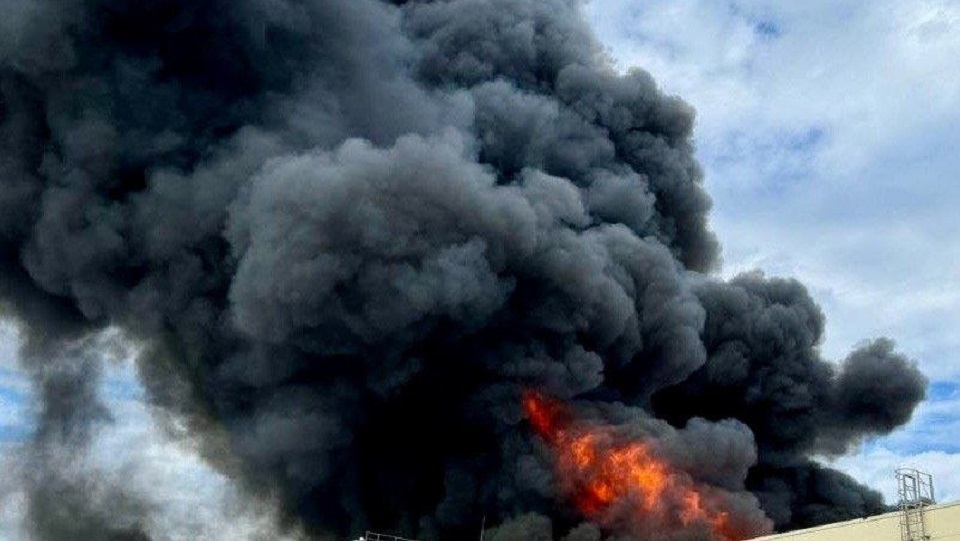
Russian Strike on Dnipro Damages Major Retail and Logistics Facilities, Leaves Multiple Injured
A Russian missile strike on the Ukrainian city of Dnipro on June 3rd resulted in multiple casualties and significant damage to civilian infrastructure, including warehouses belonging to ATB, Ukraine’s largest grocery retail chain, and a terminal operated by Nova Poshta, the country’s leading private postal and logistics company. The attack represents yet another instance of Russia targeting civilian and commercial infrastructure in Ukrainian cities far from the front lines, a pattern that has persisted throughout the conflict now entering its fourth year.
Emergency services responded quickly to the scene, with rescue operations continuing for hours after the initial impact. Local authorities reported that several people sustained injuries of varying severity, though specific casualty figures were still being confirmed as of the latest reports. The strike caused fires at the affected facilities, requiring firefighting teams to work alongside medical personnel and rescue workers. Residential buildings in the vicinity also reportedly suffered damage from the blast, raising concerns about the broader impact on the local community.
ATB-Market, the retail chain whose warehouses were hit, operates more than 1,300 stores across Ukraine and serves as a critical component of the country’s food supply chain. The company has continued operations throughout the war, adapting its logistics networks to ensure Ukrainians have access to essential goods despite ongoing hostilities. Damage to ATB’s distribution infrastructure could potentially affect food availability in the Dnipropetrovsk region, though the company has demonstrated remarkable resilience in maintaining supply chains under wartime conditions. The targeting of such facilities raises questions about whether critical civilian infrastructure is being deliberately attacked to disrupt daily life for Ukrainian citizens.
Nova Poshta, whose terminal was also damaged in the strike, has similarly become an essential service for Ukrainians during the war. The company handles everything from personal packages to humanitarian aid distribution, and its network of over 10,000 branches and terminals has proven vital for maintaining connections between displaced families and delivering essential supplies to various regions. Founded in 2001, Nova Poshta has grown to become not just a commercial enterprise but a crucial part of Ukraine’s wartime resilience infrastructure. The damage to one of its terminals in Dnipro underscores the vulnerability of logistics networks that millions of Ukrainians depend upon daily.
Dnipro, located on the Dnieper River in central-eastern Ukraine, has been repeatedly targeted by Russian strikes since the full-scale invasion began in February 2022. The city, with a pre-war population of approximately one million people, serves as a major industrial and transportation hub. Its strategic location has made it both essential for Ukrainian defense logistics and a frequent target for Russian long-range strikes. One of the deadliest attacks occurred in January 2023, when a Russian missile struck a residential high-rise building, killing at least 46 people and injuring over 80 others. The city has since strengthened its air defense capabilities, but the vastness of Ukrainian territory makes comprehensive protection challenging.
International observers and human rights organizations have consistently documented Russia’s pattern of striking civilian infrastructure throughout the conflict. According to United Nations reports, thousands of civilians have been killed and critical infrastructure including hospitals, schools, power plants, and commercial facilities have been destroyed or damaged. Such attacks potentially constitute violations of international humanitarian law, which requires parties to armed conflicts to distinguish between military and civilian targets. The European Union and United States have repeatedly condemned these strikes, with additional sanctions imposed on Russian officials and entities in response to attacks on civilian populations.
Ukrainian authorities continue to call for additional air defense systems from Western partners to better protect cities and critical infrastructure from Russian missile and drone attacks. President Volodymyr Zelenskyy has repeatedly emphasized that air defense remains Ukraine’s most pressing military need, particularly as Russia has increased its use of ballistic missiles, cruise missiles, and Iranian-designed Shahed drones. The strike on Dnipro serves as a stark reminder of the ongoing threat faced by Ukrainian civilians and the infrastructure they depend upon, even in cities hundreds of kilometers from active combat zones. As reconstruction efforts begin at the damaged ATB and Nova Poshta facilities, the broader question of how Ukraine can protect its civilian infrastructure while maintaining essential services remains at the forefront of both domestic policy and international diplomatic discussions.