Ukraine Allocates Nearly 600 Million Hryvnias for Chernobyl Safety and Exclusion Zone Maintenance
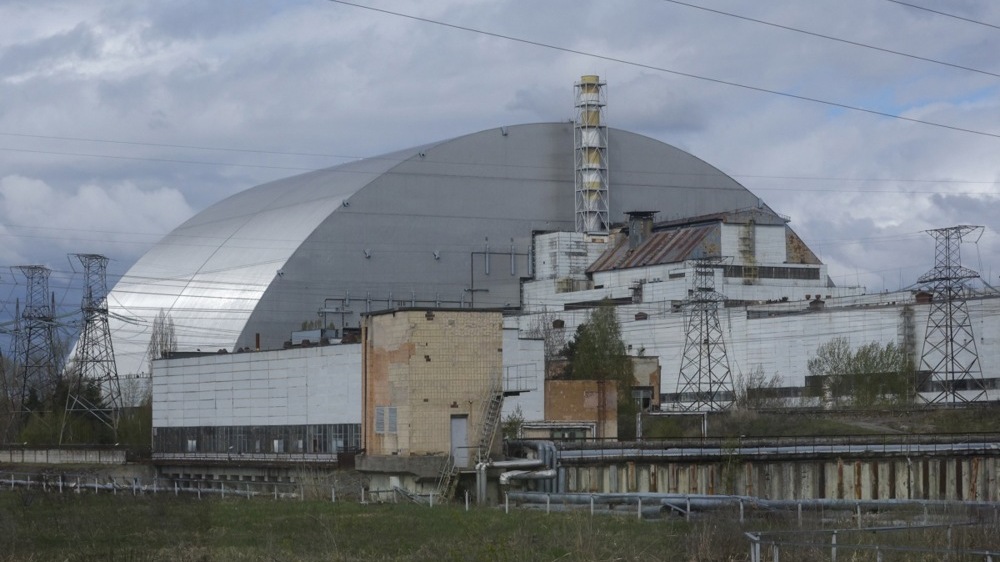
The Ukrainian government has announced a significant financial commitment to ensuring the continued safety of the Chernobyl Nuclear Power Plant and its surrounding exclusion zone. Prime Minister Denys Shmyhal revealed that nearly 600 million hryvnias will be directed toward maintaining critical safety infrastructure at one of the world’s most notorious nuclear disaster sites. Of this allocation, 525 million hryvnias will specifically support the safe maintenance of the decommissioned reactor units and the protective shelter known as the “Ukryttia” or New Safe Confinement structure.
The announcement underscores Ukraine’s ongoing commitment to nuclear safety, even as the country faces unprecedented challenges due to the ongoing conflict with Russia. The Chernobyl site, which experienced the world’s worst nuclear disaster on April 26, 1986, requires constant monitoring and maintenance to prevent radioactive contamination from spreading into the environment. The original concrete sarcophagus built hastily after the disaster had deteriorated significantly over the decades, prompting the construction of the New Safe Confinement, a massive arch-shaped steel structure completed in 2016 at a cost of over 1.5 billion euros.
The New Safe Confinement, spanning 257 meters wide and 108 meters tall, was designed to contain the radioactive remains of Reactor 4 for at least 100 years. However, maintaining this engineering marvel requires substantial ongoing investment. The structure must withstand extreme weather conditions, seismic activity, and the corrosive effects of the radioactive environment it encases. Engineers and nuclear safety experts continuously monitor radiation levels, structural integrity, and environmental conditions to ensure the containment remains effective.
The 30-kilometer exclusion zone surrounding the plant presents its own unique challenges. This restricted area, covering approximately 2,600 square kilometers of Ukrainian and Belarusian territory, has become an unintended wildlife sanctuary while simultaneously serving as a stark reminder of nuclear power’s potential dangers. Ukrainian authorities maintain checkpoints, firefighting capabilities, and emergency response teams throughout the zone. Forest fires pose a particular threat, as they can release radioactive particles trapped in vegetation and soil back into the atmosphere.
The funding allocation comes at a particularly sensitive time for Ukrainian energy infrastructure. During the early stages of Russia’s full-scale invasion in February 2022, Russian forces occupied the Chernobyl site for approximately five weeks, raising international alarm about potential nuclear safety incidents. Ukrainian workers at the facility were forced to work extended shifts under occupation, and there were reports of Russian soldiers disturbing contaminated soil in the highly radioactive Red Forest area. The International Atomic Energy Agency (IAEA) has since increased its presence and monitoring activities at Ukrainian nuclear facilities.
Energy Minister German Galushchenko emphasized that the investment reflects Ukraine’s responsibility not only to its own citizens but to the entire European continent. The Chernobyl disaster’s radioactive fallout affected vast areas across Europe, with measurable contamination detected as far as Sweden, Germany, and the United Kingdom. Countries including Belarus, Russia, and Ukraine bore the brunt of the contamination, with hundreds of thousands of people permanently displaced from their homes. The long-term health effects continue to be studied and debated by scientists worldwide, with thyroid cancer rates among those exposed as children showing significant increases.
Beyond the immediate safety infrastructure, the allocated funds will support the ongoing decommissioning process of the remaining reactor units. Reactors 1, 2, and 3 continued operating for years after the 1986 disaster, with the last unit finally shutting down in December 2000 under international pressure. The complete decommissioning process is expected to take several more decades and requires specialized expertise, equipment, and substantial financial resources. Ukraine works closely with international partners, including the European Bank for Reconstruction and Development and various EU programs, to manage this complex undertaking while developing the site’s potential for renewable energy projects and scientific research.