
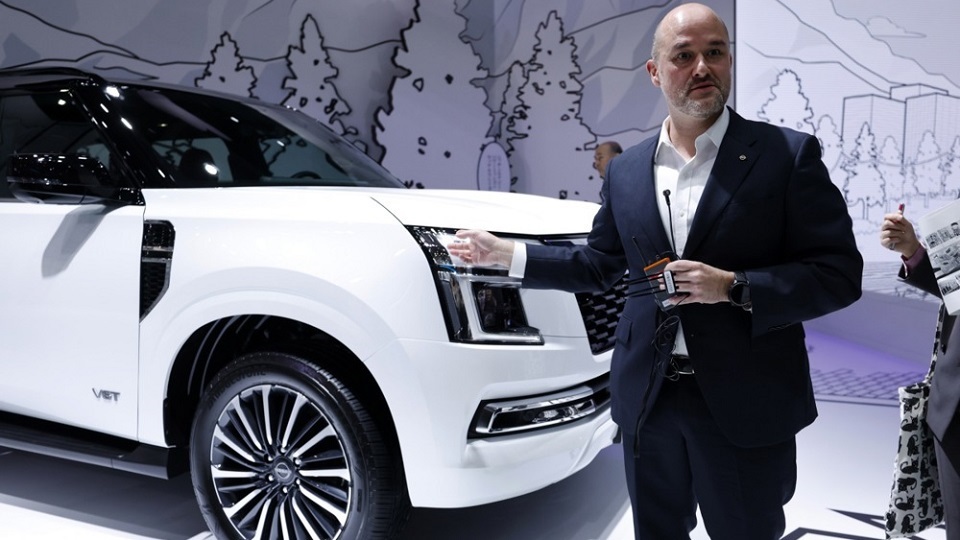
Nissan to Cut Vehicle Development Time in Half by Adopting Chinese-Style Innovation Methods
Japanese automotive giant Nissan has announced an ambitious plan to dramatically reduce its vehicle development timeline, aiming to halve the time it takes to bring new models from concept to showroom. The struggling automaker is looking eastward for inspiration, seeking to emulate the rapid innovation cycles that have made Chinese electric vehicle manufacturers some of the most agile players in the global automotive industry. This strategic pivot comes as Nissan battles declining sales and increased competition from both traditional rivals and emerging EV startups.
The company’s new approach centers heavily on artificial intelligence integration throughout the development process. By leveraging AI-powered design tools, simulation software, and automated testing systems, Nissan hopes to compress what traditionally takes four to five years into approximately two to two and a half years. This acceleration would allow the Japanese manufacturer to respond more quickly to shifting consumer preferences and technological advancements, particularly in the rapidly evolving electric vehicle segment where being first to market can determine success or failure.
The decision to learn from Chinese competitors represents a significant shift in automotive industry dynamics. For decades, Asian automakers like Nissan and Toyota set the standard for efficient manufacturing through innovations like lean production and just-in-time inventory management. However, Chinese companies such as BYD, NIO, and Xpeng have revolutionized the development cycle by embracing vertical integration, aggressive software iteration, and a willingness to launch vehicles that continue to evolve through over-the-air updates. BYD, for instance, can bring a new model to market in as little as 18 months, roughly half the time of traditional automakers.
Nissan’s restructuring effort comes against a backdrop of serious financial challenges. The company has faced declining market share in key regions, including North America and China, where it once held strong positions. Recent reports indicate that Nissan may cut thousands of jobs globally and reduce production capacity as part of a broader turnaround strategy. The automaker’s partnership discussions with Honda and potential involvement of Foxconn highlight the urgency of its situation. Industry analysts suggest that without dramatic changes to its product development approach, Nissan risks falling further behind in the transition to electrification.
The integration of artificial intelligence into automotive development represents more than just speed improvements. AI systems can now generate thousands of design iterations in hours, test aerodynamics and structural integrity through advanced simulations, and predict consumer preferences by analyzing vast amounts of market data. Companies like Tesla have pioneered the use of real-world driving data collected from their existing fleet to improve autonomous driving systems and identify potential issues before they become widespread problems. Nissan’s adoption of similar technologies could help bridge the innovation gap that has emerged between traditional manufacturers and tech-forward competitors.
Historical context underscores the magnitude of this transformation for Nissan. The company was once a pioneer in electric mobility, launching the Leaf in 2010 as one of the first mass-market electric vehicles. At its peak, the Leaf was the world’s best-selling EV, but Nissan failed to capitalize on its early advantage, allowing competitors to surpass it with longer-range vehicles and more advanced technology. The Ariya crossover, Nissan’s most recent significant EV launch, received mixed reviews and struggled to gain traction in a market now crowded with compelling alternatives. This new development strategy represents an attempt to recapture the innovative spirit that once defined the brand.
Industry experts view Nissan’s initiative as both necessary and challenging. Compressing development timelines requires not just new technology but fundamental changes to organizational culture, supplier relationships, and quality control processes. Japanese automakers have traditionally prioritized meticulous engineering and extensive testing, values that have built their reputation for reliability over decades. Balancing speed with quality will be crucial, as any shortcuts that result in recalls or safety issues could further damage Nissan’s brand reputation. However, if successful, this transformation could serve as a model for other legacy automakers struggling to compete in an industry increasingly defined by software, connectivity, and rapid iteration.
The global automotive industry is watching Nissan’s gambit closely. With electric vehicle adoption accelerating worldwide and regulatory pressure mounting to phase out internal combustion engines, manufacturers that cannot quickly adapt their portfolios face existential threats. Nissan’s willingness to learn from Chinese competitors and embrace AI-driven development signals a recognition that the rules of automotive competition have fundamentally changed. Whether this strategic pivot can restore Nissan to its former prominence remains to be seen, but the alternative—continued adherence to traditional timelines—appears increasingly untenable in today’s fast-moving market.