
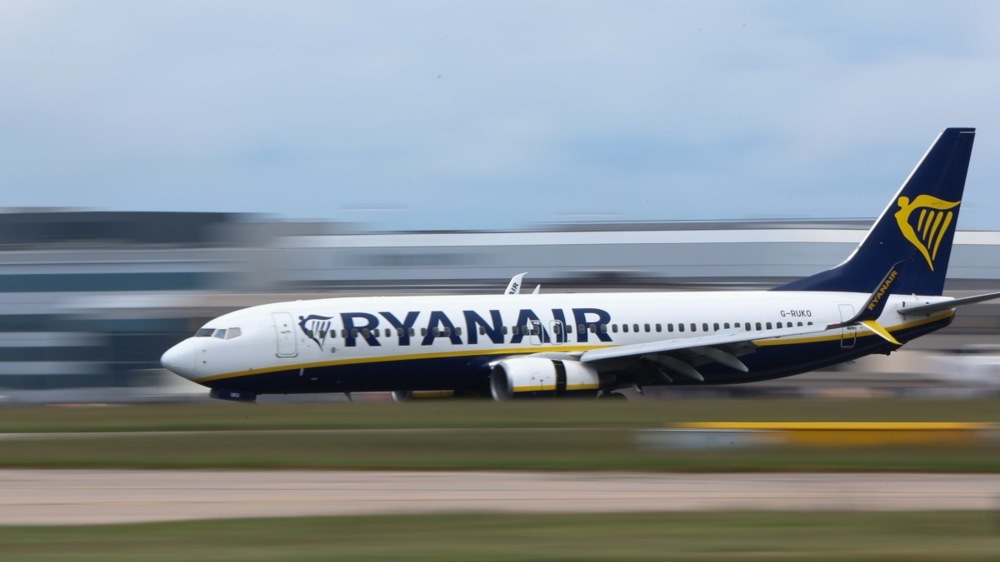
Ryanair Passenger Nearly Sucked Out of Aircraft During Flight as Regulators Launch Investigation
A terrifying incident aboard a Ryanair-operated Boeing 737 has prompted urgent investigations by aviation authorities after a passenger was nearly pulled out of the aircraft during flight. The harrowing event occurred on July 10th when the plane, operated by Malta Air — a subsidiary of the Irish budget carrier Ryanair — was forced to make an emergency landing following what appears to be a catastrophic cabin pressure event or structural failure.
Details surrounding the incident remain limited as investigators work to piece together exactly what transpired at cruising altitude. According to preliminary reports, the passenger was subjected to extreme forces that nearly ejected them from the aircraft, suggesting a possible breach in the fuselage or a failure of a door seal or window. Emergency protocols were immediately activated as the flight crew initiated a rapid descent and diverted to the nearest suitable airport for an emergency landing. All passengers and crew members reportedly survived the incident, though the psychological trauma for those aboard cannot be understated.
The Boeing 737, one of the most widely used commercial aircraft in aviation history, has been under increased scrutiny in recent years following a series of high-profile incidents. The aircraft family, which first entered service in 1968, has transported billions of passengers and maintains a generally strong safety record. However, the 737 MAX variant was grounded worldwide for nearly two years following two fatal crashes in 2018 and 2019 that killed 346 people. While this latest incident involves a different variant of the 737, it nonetheless raises fresh questions about maintenance standards, inspection protocols, and the overall condition of aging aircraft in commercial fleets.
Ryanair, Europe’s largest low-cost carrier, operates one of the world’s largest fleets of Boeing 737 aircraft. The airline has built its business model around high aircraft utilization rates, quick turnaround times, and cost efficiency. Malta Air, the subsidiary involved in this incident, was established in 2019 as part of Ryanair’s restructuring efforts and operates flights across Europe using the parent company’s aircraft and operational standards. Aviation safety experts note that budget carriers are subject to the same rigorous safety regulations as full-service airlines, though the pressure to maintain tight schedules and minimize costs has occasionally raised concerns about maintenance practices across the industry.
Cabin depressurization events, while rare, represent one of the most dangerous scenarios in commercial aviation. When an aircraft’s pressurized cabin is compromised at high altitude, the rapid loss of pressure can cause oxygen deprivation, extreme cold, and in severe cases, passengers or objects can be forcibly expelled through the breach. One of the most infamous examples occurred in 1988 when Aloha Airlines Flight 243 suffered an explosive decompression that tore away a large section of the fuselage, killing a flight attendant who was swept out of the aircraft. More recently, in 2024, an Alaska Airlines Boeing 737 MAX 9 experienced a door plug blowout shortly after takeoff, creating a gaping hole in the fuselage, though fortunately no passengers were seated directly next to the opening.
European Union Aviation Safety Agency officials and other relevant regulatory bodies have launched formal investigations into the July 10th incident. Investigators will examine the aircraft’s maintenance records, inspect the physical damage to the fuselage, analyze flight data recorders, and interview crew members and passengers. The investigation process can take months or even years to complete, as authorities work to determine not only what happened but also whether systemic issues exist that could affect other aircraft. Ryanair has stated it is cooperating fully with investigators, though the airline has released limited public information about the incident pending the outcome of official inquiries.
This latest scare adds to mounting pressure on both Boeing and airlines worldwide to reassure passengers about flight safety. The American aerospace manufacturer has faced intense criticism and regulatory action following the door plug incident earlier this year, leading to production slowdowns and renewed oversight. For passengers, such incidents serve as stark reminders of the engineering marvels that make routine air travel possible — and the catastrophic consequences when those systems fail. As investigators work to uncover the truth behind this near-tragedy, the aviation industry faces continued questions about whether enough is being done to prevent such terrifying events from occurring in the skies above.